
Results & Experience
You Can Trust!
Over 50 Years of Experience
Over $150 Million Recovered
Over 98% of Cases Won
You Can Trust!
Over 50 Years of Experience
Over $150 Million Recovered
Over 98% of Cases Won



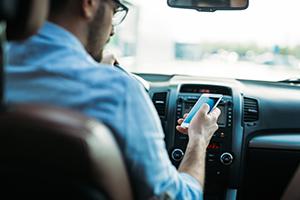
A text notification, a glance at a navigation screen or a reach for a dropped coffee can take a driver’s attention off the road and cause a serious crash in seconds. If you or a loved one has been injured in a distracted driving accident, an experienced Los Angeles distracted driving accident lawyer can explain your legal options and help you seek compensation for your losses. Contact us today for a FREE consultation or call us on our toll free number 866-INJURY-2 (866-465-8792).
For more than 50 years, our family-owned law firm has represented people injured in California car accidents and families who have lost loved ones in wrongful death cases. We treat every client like family, not a case number. This guide explains California distracted driving laws, how evidence can establish driver negligence, what compensation you may recover and what steps to take after a distracted driving accident. Your consultation is FREE and you pay NO attorney fees unless we recover compensation for you. Contact us now.
Key Takeaways
- Distraction is bigger than texting. Federal safety officials count anything that pulls a driver’s eyes, hands or attention away from the road, including navigation screens, passengers, food and grooming.
- You can recover even if you share some blame. California’s pure comparative negligence rule reduces, but does not erase, your compensation.
The National Highway Traffic Safety Administration (NHTSA) defines distraction as a type of inattention in which a driver diverts attention from driving to focus on something else. Safety researchers usually group distractions into three kinds, and many activities involve more than one:
Common real-world examples include texting, scrolling social media, video calls, entering an address into GPS, using an in-dash touchscreen, eating or drinking, applying makeup, turning to talk to children in the back seat, and rubbernecking at an earlier collision. NHTSA’s crash data even counts talking on a hands-free or Bluetooth phone as a distraction, because the mental load can still pull a driver’s focus from the road.
Why does this matter to your injury claim? A driver who breaks a safety law like these may be presumed negligent under Evidence Code section 669, as long as the violation caused your injuries and you are the kind of person the law was meant to protect. Even without a traffic ticket, every California driver owes a duty of reasonable care under Civil Code section 1714. A distracted driver who fails that duty can be held responsible.
Latest California data provides an updated picture of distracted-driving crashes.
Key California Statistics: 2024
- 200 people killed in distracted-driving crashes in California, up 23.5% from 2023, even as the national figure fell about 2%.
- Distraction was tied to about 5.2% of all California traffic deaths.
- Los Angeles County ranked first in the state with 30 distracted-driving deaths and 118 serious injuries, ahead of San Diego County (28 deaths, 41 serious injuries).
- 73.5% of fatal distracted-driving crashes occurred in urban areas.
- The most common crash types among fatal and serious-injury distracted-driving crashes were vehicle-versus-pedestrian (28.2%), rear-end (18%) and broadside (16.6%).
Source: UC Berkeley Safe Transportation Research and Education Center, 2026 SafeTREC Traffic Safety Facts: Distracted Driving, using FARS 2024 and provisional SWITRS 2024 data.
Los Angeles County’s heavy traffic and busy freeways contribute to distracted-driving risks. Major routes, including the 101, 405, 5, 10 and 134, as well as busy boulevards such as Ventura, Sepulveda and Van Nuys, are places where a moment of distraction can cause a rear-end collision or intersection crash.
Gary K. Walch, A Law Corporation, serves clients throughout the region, including Woodland Hills, Encino, Tarzana, Sherman Oaks, Van Nuys, Calabasas, Ventura County, Burbank, Glendale, Pasadena, Beverly Hills and Santa Monica.
These are general observations about driving conditions, not crash statistics for specific roads. If you were injured in a distracted-driving accident anywhere in Southern California, California law may provide options for pursuing compensation, subject to applicable deadlines.
Distracted drivers may fail to brake in time, increasing the force of impact and the risk of serious injuries. Victims may suffer whiplash, neck and back injuries, concussions, traumatic brain injuries, herniated discs, spinal cord damage, broken bones, internal bleeding, burns, deep cuts, scarring or damage to internal organs. Some people also experience post-traumatic stress, anxiety and sleep problems after a serious crash. Certain injuries may not cause obvious symptoms immediately, making prompt medical evaluation important.
Many distracted drivers deny it. The insurance company then argues you cannot prove what was in the other driver’s hands or mind. Strong cases are built from several kinds of evidence, and most of it can disappear if nobody acts quickly.
In litigation, your attorney can send preservation letters to demand that evidence be kept and can use formal discovery, including subpoenas, to obtain it. A phone record alone does not always prove distraction. A call might have ended a minute earlier or a text could have come from a passenger, so timing analysis and, where needed, expert testimony matter.
The distracted driver may not be the only liable party. Depending on the circumstances, others may share responsibility:
California follows a “pure comparative negligence” system, first adopted by the California Supreme Court in Li v. Yellow Cab Co. (1975) 13 Cal.3d 804. A jury decides what percentage of fault belongs to each person and your compensation is reduced by your share. You do not lose the right to recover just because you were partly responsible.
California also limits a defendant’s share of “non-economic” damages (such as pain and suffering) to their own percentage of fault under Civil Code section 1431.2 and a driver who was uninsured at the time is generally barred from recovering non-economic damages from an insured at-fault driver under Civil Code section 3333.4. These rules affect how cases are valued, so it is worth discussing them with an attorney early.
The types of damages in a distracted driving case generally fall into three groups.
Rarely awarded; may apply when the defendant’s conduct involves malice, oppression or fraud under California law.
Injury severity, medical expenses, lost income, available evidence, insurance coverage and any shared fault. Past medical damages are generally limited to amounts paid or owed and liens or reimbursement claims may reduce the final recovery.
Since January 1, 2025, California’s minimum auto liability insurance limits are $30,000 per person, $60,000 per accident and $15,000 for property damage (30/60/15) under Senate Bill 1107. These limits may not cover the full cost of a serious injury.
If the at-fault driver’s insurance is insufficient, other sources of recovery may include:
| Deadline | What it means |
|---|---|
| Two years | Most personal injury and wrongful death lawsuits must be filed within two years under Code of Civil Procedure section 335.1. Missing it usually ends the case. |
| Six months | If a government entity or employee is involved, a written claim generally must be presented within six months of the injury (Government Code section 911.2). A short window to file suit follows a denial. |
| 10 days | California drivers must report a crash to the DMV within 10 days if anyone was injured or killed or if property damage exceeded $1,000 (Vehicle Code section 16000). Your attorney can help you handle this. |
| Days to weeks | Video footage and some digital records may be overwritten or deleted long before any legal deadline arrives. |
Exceptions can extend or shorten these time limits, for example for injured minors or in cases involving public agencies, so please do not rely on a single date. Speak to an attorney as soon as you can.
When distracted driving causes a death, eligible family members may file a wrongful death claim under California Code of Civil Procedure § 377.60. Recoverable damages may include:
The deceased person’s estate may also pursue a separate survival action for eligible losses incurred before death. Because the applicable rules vary, families should consult a lawyer about their rights and available damages.
For over 50 years, Gary K. Walch, A Law Corporation, has handled personal injury and wrongful death cases throughout Los Angeles and California, recovering millions of dollars for clients. As a family-owned law firm, we provide personal attention, help with medical care arrangements and property damage claims and work directly with clients throughout the legal process. Your consultation is FREE, and you pay NO attorney fees unless we recover compensation for you.
A distracted driver’s split-second decision can leave you facing months or years of recovery or a family grieving a loved one. Speaking with an experienced lawyer promptly can help preserve crucial evidence and protect your legal rights. Contact us today for a FREE consultation and case evaluation.
Every case is different and past results do not guarantee a similar outcome. We are committed to providing honest advice, careful preparation and dedicated representation.