
Results & Experience
You Can Trust!
Over 50 Years of Experience
Over $150 Million Recovered
Over 98% of Cases Won
You Can Trust!
Over 50 Years of Experience
Over $150 Million Recovered
Over 98% of Cases Won



Looking for experienced TMJ lawyers in California or dealing with jaw pain, clicking or a locked jaw after a car accident, Walch Law can help. For more than 50 years, our Personal Injury Attorneys have represented Californians injured in car accidents, motorcycle accidents, truck accidents and pedestrian accidents — including hard-to-diagnose injuries like TMJ that insurance companies often try to dismiss.
A blow from an airbag, a hard jolt to the face or violent whiplash can damage the temporomandibular joint (TMJ), causing pain, clicking, headaches and limited jaw movement that may last for months or even years. If you have suffered a TMJ injury in California, Walch Law’s Personal Injury Attorneys have more than 50 years of experience helping injured Californians document difficult-to-diagnose injuries and hold negligent parties accountable. Please contact us now for your FREE consultation and case evaluation or you may also call us at 818-222-3400 (again, after hours, please dial “1”). — There is no fee unless we win your case. For more information, you may visit our TMJ home page.
The temporomandibular joint sits just in front of each ear, where the lower jawbone (the mandible) meets the temporal bone at the side of the skull. Unlike most joints in the body, the TMJ works as a matched pair — both sides move together every time you talk, chew, swallow or yawn. A rounded structure at the top of the jawbone, called the condyle, glides within a socket in the temporal bone. A small cartilage disc cushions that motion so the joint moves smoothly rather than grinding bone against bone.
Because the TMJ combines a hinge motion with a sliding motion and is surrounded by a dense network of nerves, ligaments and muscles, it is considered one of the most mechanically complex joints in the human body — and one of the most vulnerable to trauma.
TMJ injuries are common in California car, motorcycle, truck, rideshare and pedestrian accidents, yet they are frequently overlooked in the chaos of the emergency room, where the priority is ruling out fractures and internal injuries. Typical mechanisms include:
Key Takeaways
|
Only a physician or qualified TMJ specialist can accurately diagnose a jaw joint injury, but the following symptoms are common warning signs that should prompt an evaluation, especially after any recent collision:
Jaw pain does not always appear immediately. Adrenaline, inflammation and the focus on more obvious injuries can delay TMJ symptoms by days or even weeks after a crash. That delay is medically well documented, but it is also exactly what insurance adjusters look for when they try to argue that a jaw injury is unrelated to the collision. Prompt medical evaluation — and a clear, written record connecting your symptoms to the crash — is one of the most important things you can do to protect both your health and your claim.
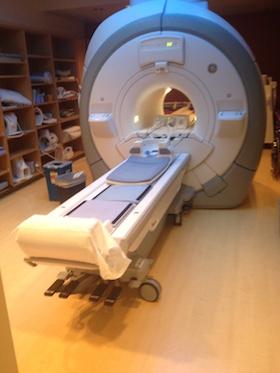
A thorough evaluation typically involves a physical examination of jaw movement and joint sounds, a review of bite alignment, and imaging such as an MRI or CT scan to assess the disc, condyle and surrounding soft tissue. Many accident victims are referred from their primary treating physician to an oral and maxillofacial specialist, orofacial pain dentist, or TMJ specialist for a definitive diagnosis and treatment plan.
There is no single best treatment for TMJ injuries and the right approach often depends on the severity of the injury and how the individual patient responds. A treating specialist may recommend a combination of the following:
Conservative care is generally the first line of treatment and when successful, commonly runs for four to nine months before symptoms stabilize.
When conservative treatment does not resolve the injury, options range from minimally invasive arthrocentesis and arthroscopy to open-joint surgery, followed by a structured course of rehabilitation and physical therapy. Even with excellent treatment, some TMJ injury victims are left with permanent limitations because of how delicate and nerve-rich this joint is.
Because TMJ injuries do not always show up clearly on X-rays and often involve delayed or fluctuating symptoms, insurance companies frequently dispute these claims. Common tactics include arguing that the jaw pain is a pre-existing condition, pointing to any gap in treatment as proof the injury was not serious, sending claimants to an insurer-selected “independent” medical exam designed to minimize findings and offering a quick, low settlement before the long-term impact of the injury is known. An experienced attorney can push back on each of these tactics with medical documentation, specialist testimony and a well-prepared claim.
A TMJ injury can entitle you to compensation for both financial losses and the impact on daily life, including:
California law gives injured accident victims specific rights and specific deadlines. Two of the most important rules to understand are:
Because TMJ injuries can be difficult to link conclusively to a specific crash, thorough medical documentation and, where appropriate, expert testimony are essential to proving causation and the true value of the claim.
For more than 50 years, Gary K. Walch, A Law Corporation has represented seriously injured Californians and their families, recovering millions of dollars in verdicts and settlements. As a family-owned firm, we treat every client like family, not a case number — something larger firms that rely on television and billboard advertising often cannot offer. We work with trusted TMJ and orofacial pain specialists to build the medical record insurance companies cannot easily dismiss, and we handle the claim so you can focus on treatment and recovery.
Every case is different, and results are never guaranteed, but our team is ready to evaluate your situation. Our consultation is absolutely FREE and there is NO FEE until you win, so please contact us now for your FREE consultation and case evaluation.