
Results & Experience
You Can Trust!
Over 50 Years of Experience
Over $150 Million Recovered
Over 98% of Cases Won
You Can Trust!
Over 50 Years of Experience
Over $150 Million Recovered
Over 98% of Cases Won



Struggling with a hip injury? Our California hip injury lawyers are here to help. We proudly serve clients throughout the state and work diligently to pursue the compensation they may be entitled to under the law. A broken hip is rarely “just” a broken hip. For an active adult, it can mean months of surgery and rehabilitation. For an older parent or grandparent, it can be the single event that ends independent living for good. If you or someone you love suffered a hip injury or hip fracture in a car accident, truck accident, motorcycle crash, pedestrian collision, or a slip-and-fall anywhere in Los Angeles County, the San Fernando Valley, Ventura County, Riverside, or elsewhere in California, our hip injury lawyers want to hear from you. Feel free to contact our Hip Injury & Hip Fracture Personal Injury Attorneys for your FREE consultation. There is no fee unless and until we win your case.
With more than 50 years of legal experience, Walch Law’s California personal injury attorneys help victims of hip injuries and hip fractures protect their rights and pursue fair compensation. If you or someone you care about suffered a hip injury or fracture in an accident anywhere in California, contact our experienced hip injury attorneys today for a completely FREE consultation.
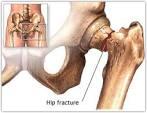
The hip joint is where the femur, the largest bone in the human body, meets the pelvis at a socket called the acetabulum. Three pelvic bones — the ilium, ischium, and pubis — fuse together to form that socket. This ball-and-socket design allows the leg to rotate, swing, and bear the full weight of the body while walking, running, standing, or getting up from a chair.
Surrounding the joint is a tough, fibrous capsule reinforced by ligaments that keep the femoral head seated in the socket. That structure gives the hip an unusual combination of strength and mobility — it is one of the few joints in the body built to carry weight continuously while still allowing a wide range of motion. When a hip fracture happens, this entire load-bearing and mobility system fails at once, which is why the injury has such an outsized effect on a person’s ability to walk, work, and live independently, and why treatment so often requires surgical stabilization or a full or partial hip replacement.
A hip fracture occurs when the neck or head of the femur — the part closest to the hip joint — breaks. Older adults with osteoporosis can fracture a hip from a relatively minor fall, but in people with normal, healthy bone density, a hip fracture is almost always the product of significant trauma. In our experience representing injured clients across Southern California, hip fractures most often result from:
California ranks second in the nation for total traffic fatalities, and the state’s 2023 fatality count was 29% higher than a decade earlier. Pedestrians bear a disproportionate share of that risk as they age: nationally, 19% of people 65 and older killed in traffic crashes were pedestrians — a higher share than any other age group — and intersection crashes are disproportionately common among older drivers. Because older adults are also the population most vulnerable to a disabling hip fracture, a routine-looking intersection or crosswalk collision can become life-altering far more easily than it would for a younger, healthier person.
Falls compound the problem away from the roadway, too. About 14 million older adults — roughly 28% — reported falling in a recent year, and nearly 39,000 older adults died from unintentional falls that same period. More recent CDC data shows the trend worsening: the age-adjusted death rate from falls among older adults rose 21% between 2018 and 2024. When a fall happens because a property owner failed to fix a broken step, clean up a spill, or provide adequate lighting, California premises liability law may allow the injured person to hold that property owner accountable.
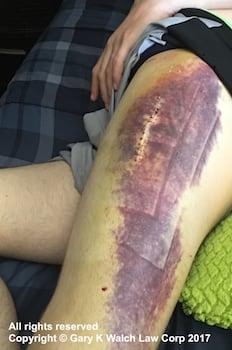
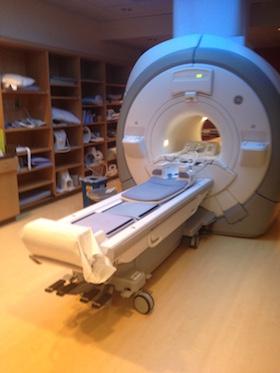
Hip fractures are typically confirmed with X-ray imaging, and MRI is used when a fracture is suspected but not visible on an X-ray, or to evaluate soft tissue and blood supply to the femoral head. Most hip fractures caused by significant trauma require surgery, which may involve:
The consequences extend well beyond the operating room. A fall serious enough to cause a hip fracture often functions as a turning point that marks the beginning of a broader decline in a person’s health and independence. That is why a hip fracture claim needs to account for more than just the initial surgery — it should also cover:
For example, a 68-year-old rear-ended at a stoplight who undergoes hip replacement surgery may need six to twelve months of physical therapy, temporary in-home help, and possibly a second surgery years later if the hardware fails — costs an insurance company’s first offer almost never reflects.
California allows an injured person to recover damages even if they share some responsibility for the accident. Under the “pure comparative negligence” rule adopted by the California Supreme Court in Li v. Yellow Cab Co. (1975) 13 Cal. 3d 804, a jury or insurance adjuster assigns a percentage of fault to each party, and an injured person’s damages are reduced — but not eliminated — by their own percentage of fault. Even someone found to be 60% or 80% responsible can still recover the remaining percentage of their damages. This matters enormously in hip fracture cases arising from intersection collisions, left-turn accidents, or falls where a property owner argues the injured person “should have seen” a hazard. Comparative fault is frequently the central battleground insurance companies fight over, and it is an area where experienced legal representation can materially change the outcome.
We regularly see well-meaning accident victims unintentionally hurt their own claims:
Insurance companies are not on the injured person’s side, no matter how friendly an adjuster sounds on the phone. Common tactics we see in hip fracture claims include:
An experienced hip injury attorney deals with these tactics every day and can push back with medical documentation, biomechanical analysis, and, when necessary, litigation.
Under California Code of Civil Procedure § 335.1, an injured person generally has two years from the date of an injury, or a person’s death, caused by another’s wrongful act or negligence to file a personal injury or wrongful death lawsuit. That deadline can be much shorter in certain situations. When a government entity contributed to the injury — for example, a fall on a defective public sidewalk or a crash involving a city or county vehicle — a formal written claim generally must be presented to that public entity within six months of the incident under the California Government Claims Act (Government Code § 911.2), before a lawsuit can even be filed. Special rules can also extend deadlines for injured minors or apply a “discovery rule” when an injury is not immediately apparent. Because the statute of limitations clock keeps running even during active settlement negotiations with an insurance company, waiting to consult a lawyer is one of the most common — and most costly — mistakes an injured person can make.
Hip fracture cases are medically and legally complex, and the stakes for older or already-vulnerable clients are especially high. Our firm:
At Gary K. Walch, A Law Corporation, we have represented injured Californians for 50 years. Our clients are treated like family — not a case number — which is why so many of our new clients come to us on the recommendation of someone we have helped before. Our consultation is absolutely FREE and there is NO FEE until you win, so please contact us now for your FREE consultation and case evaluation.
A hip fracture is a break in the bone, usually at the femoral neck or head. A hip dislocation happens when the femoral head is forced completely out of the acetabular socket without necessarily breaking. Both are serious and often occur together in high-energy trauma such as a car crash.
Recovery varies widely based on age, overall health, and the type of surgery performed, but rehabilitation commonly takes many months, and some patients never fully regain their pre-injury mobility.
Yes. California is a pure comparative negligence state, so your damages are reduced by your percentage of fault, not eliminated by it, even if you were majority at fault.
Generally, two years from the date of injury under CCP § 335.1, but only six months to file a government claim if a public entity may be responsible, so it is important to speak with an attorney promptly.
These are premises liability cases. The property owner or managing entity may be responsible if a dangerous condition they knew or should have known about caused the fall.
Most personal injury and wrongful death claims resolve through negotiation or mediation, but our firm prepares every case as if it will go to trial, which strengthens our negotiating position.
California allows certain surviving family members to bring a wrongful death claim under CCP § 377.60. Please contact us to discuss your situation.
Yes. Some hip fractures, particularly stress or hairline fractures, are not immediately obvious, and delayed treatment can both worsen the injury and give an insurer ground to dispute the claim.
Our consultation is completely free, and we work on a contingency basis, meaning there is no fee unless and until you win.
Depending on the facts, recoverable damages can include medical expenses (past and future), lost income and earning capacity, pain and suffering, and, in fatal cases, wrongful death damages for surviving family members.
If you or someone you love suffered a hip injury or hip fracture in a car accident, truck accident, motorcycle crash, pedestrian accident, or a slip-and-fall anywhere in Los Angeles, the San Fernando Valley, Ventura, Riverside, or anywhere in California, please don’t wait to get legal advice. Evidence disappears, memories fade, and insurance deadlines run out quickly. Please contact us now for your FREE consultation.